How to follow VALORANT Champions Shanghai group stage as a new viewer
Need articles like this for your video? They help promote it on YouTube and Google — order them in the Telegram bot @sat_sit_bot. The bot writes and publishes the articles itself (with your YouTube video embedded) on popular topical websites (no ads). Try it free: 50 articles on us.
· based on the channel VALORANT Champions Tour
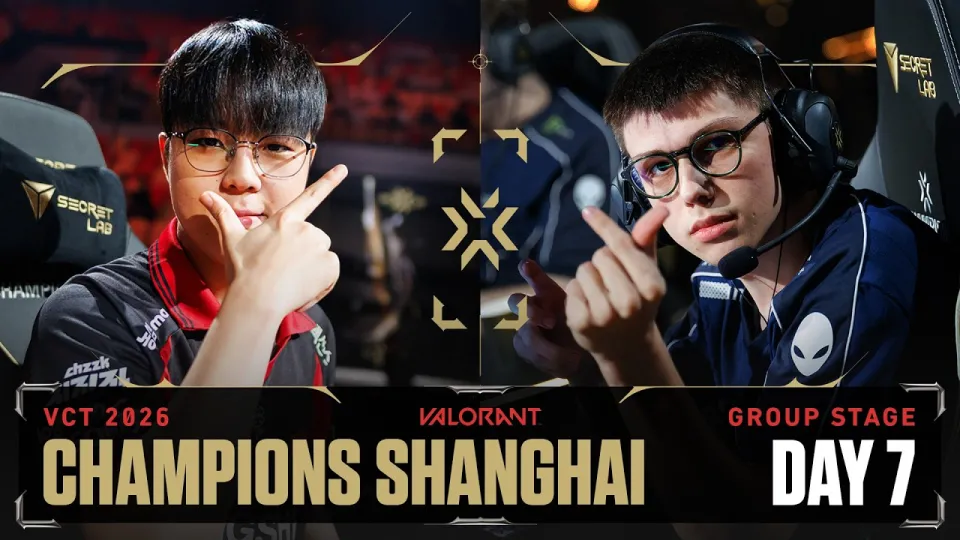
To follow VALORANT Champions Shanghai, treat the group stage as a 16-team round-robin where every best-of-three decides seeding for the playoff bracket: check the schedule on the official VALORANT Esports X account, pick the matches that matter for your region, and watch the full VODs rather than highlight reels if you want to understand how teams actually play. Day 7 of the group stage, published by the VALORANT Champions Tour channel, is a good example of what a full broadcast day looks like.
What VALORANT Champions Shanghai is and who plays in it
VALORANT Champions Shanghai is the season-ending world championship, and it brings together sixteen teams from the Americas, China (CN), EMEA and Pacific. The event runs from September 24 to October 18, with the group stage first and a single-elimination-style playoff bracket after it. The tournament description frames the field as a mix of familiar names, new contenders and a younger generation of challengers, which matches how the 2026 season played out: two separate Masters events produced two different champions, so no single team arrived in Shanghai as an obvious favorite.
For a newcomer, the important structural facts are simple. Sixteen teams is a large field, so the group stage exists to separate genuine contenders from teams that qualified on a hot run. Each group plays a round-robin of best-of-three series, and the results determine who advances directly, who drops into a lower seed and who goes home. That is why a single map loss can matter as much as a series loss: map differential is often the tiebreaker that decides a playoff spot.
How the group stage format actually works
Group stage VALORANT at Champions uses best-of-three series, and the format rewards consistency over a single explosive map. A team that wins 2-0 collects a cleaner map record than a team that wins 2-1, and when groups are tight that difference decides seeding. In practice this means viewers should watch three things:
- Map picks and bans. The veto reveals what a team believes about its own pool and the opponent's. A team that bans Ascent every series is telling you something about its confidence.
- Pistol rounds and eco decisions. Group stage matches are frequently decided by rounds that should be lost. Teams that convert 5v2 and anti-eco situations advance; teams that don't, don't.
- Seed implications. A first-place group finish usually means an easier playoff path, so even a dead-rubber match can change the bracket.
The Day 7 broadcast is a full-day VOD, which is exactly the right format for studying these details: you see the veto, the pauses, the economy and the adaptation across maps, not just the frag highlights.
What Day 7 of the group stage shows about the 2026 field
The Day 7 VOD from the VALORANT Champions Tour channel captures a full broadcast day of group stage VALORANT, including the technical pauses that became a running theme in the chat. Two things stand out for anyone using the VOD as a study tool. First, the level of utility discipline in the CN matchups is visibly different from what viewers expect from EMEA and Pacific teams, and the audience reaction reflected that: complaints about lost anti-eco rounds, blown 5v2s and predictable setups once a team's prepared strategies stopped working. Second, the broadcast length itself is a signal — a full day of best-of-threes means teams are showing multiple maps, and their map pools become public information for playoff opponents.
That is the real value of watching group stage VODs rather than only playoff highlights. By the time the bracket starts, every team's comfort picks, default setups and retake patterns have been broadcast in full. Analysts and opposing coaches are watching the same footage.
How to watch a full-day VOD without wasting hours
A full-day group stage broadcast is long, so the practical approach is to watch it in layers. Start with the veto and the first three rounds of each map to see the opening setups. Then jump to the half-time economy: the last four rounds before the switch usually reveal whether a team can adapt. Finish with the closing rounds of each map, where timeout usage and clutch decisions decide the series. If you want to track a specific player, follow their utility usage rather than their kills — a Controller or Initiator's value shows up in where the smokes and recon land, not in the scoreboard.
For live scheduling and announcements, the official channels are the fastest source: the VALORANT Esports X account posts match times and updates, and the same organization runs the Facebook, Instagram, TikTok, Twitch and YouTube channels linked in the broadcast description. If you prefer watching live rather than on demand, Twitch and YouTube both carry the official stream, and Kick is listed as an additional platform.
Common questions from the group stage audience
Three recurring concerns come up around this stage of Champions. The first is technical pauses: long broadcasts sometimes include extended breaks, and viewers often ask whether the schedule slips. In practice, broadcast days absorb pauses into the overall runtime, so a full VOD is longer than the scheduled match block. The second is regional strength: fans regularly argue that teams from one region are weaker than teams that failed to qualify elsewhere, which is a fair debate but not something the group stage format resolves — it only resolves who advances. The third is whether a team's group stage form predicts playoff results. It partially does: map pool depth and economy discipline carry over, while individual highlight plays are less reliable signals.
Useful links
- Official VALORANT Esports news and schedule: https://www.valorantesports.com
- Live updates on X: https://x.com/valorantesports
- Facebook: https://www.facebook.com/ValorantEsports/
- Instagram: https://www.instagram.com/valorantesports/
- TikTok: https://www.tiktok.com/@valorantesports
- Twitch: https://www.twitch.tv/valorant
- Event photos: https://www.flickr.com/photos/valorantesports/
Final takeaway
The group stage of VALORANT Champions Shanghai is best understood as a seeding tournament with real consequences: sixteen teams, best-of-three series, and map differential deciding who gets an easier bracket. The Day 7 broadcast from the VALORANT Champions Tour channel is a useful reference point because it shows a full competitive day, technical pauses included, rather than a curated highlight package. Watch the veto, the eco rounds and the half-time adjustments, and you will read the playoff bracket far better than the scoreboard alone allows. For schedules and live updates, follow the official VALORANT Esports X account and check the news page at valorantesports.com before each match day.
Key takeaways
- VALORANT Champions Shanghai runs September 24 to October 18, with 16 teams from Americas, CN, EMEA and Pacific.
- Day 7 of the group stage is covered in a full-length VOD from the VALORANT Champions Tour channel.
- Two different teams won Masters events during the 2026 VCT season before Shanghai.
- Group stage matches are best-of-three; the top seeds advance to the playoff bracket.
- Official updates and schedules are posted via https://x.com/valorantesports.
Questions & answers
How many teams play in the VALORANT Champions Shanghai group stage?
Sixteen teams qualify for the event, drawn from the Americas, China, EMEA and Pacific regions. They are split into groups and play best-of-three series, with results determining playoff seeding and elimination.
Why are there so many technical pauses during the group stage broadcast?
Long broadcast days at international events include setup checks, server and hardware verification, and player equipment issues, all of which can trigger pauses. The Day 7 VOD runs longer than the scheduled match block partly because those breaks are included in the full stream.
Is the group stage format best-of-three or best-of-five?
Group stage series at Champions are best-of-three, while later playoff rounds typically move to best-of-five. That difference matters because map pool depth becomes far more important in the bracket.
Where can I watch VALORANT Champions matches live?
The official stream runs on Twitch at twitch.tv/valorant and on the VALORANT Esports YouTube channel, with Kick listed as an additional platform. Full VODs, including day-long group stage broadcasts, are published on the VALORANT Champions Tour YouTube channel.
Source: VALORANT Champions Shanghai — Group Stage — Day 7 · Markdown version