Rust Solo Life and Holding Monuments Alone
Need articles like this for your video? They help promote it on YouTube and Google — order them in the Telegram bot @sat_sit_bot. The bot writes and publishes the articles itself (with your YouTube video embedded) on popular topical websites (no ads). Try it free: 50 articles on us.
· based on the channel Blooprint
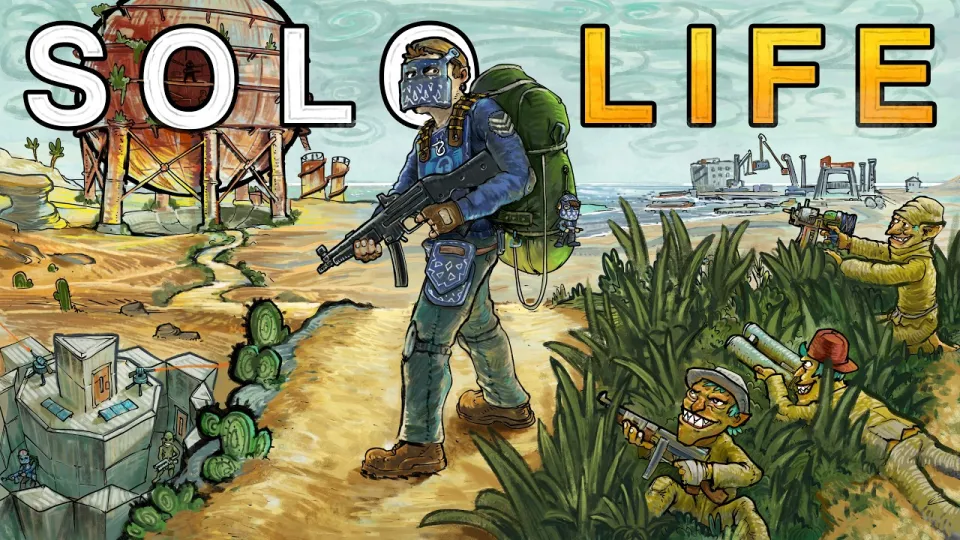
Rust solo play is about turning limited time, one pair of hands and a small base into a real threat: you farm efficiently, hold a monument before groups can contest it, and defend against neighbors who outnumber you. Blooprint's solo series, including the V16 episode, is a working example of that approach — one player claiming an overpowered monument and then surviving the consequences. If you want to try a similar run, the War Thunder registration bonus via the sponsor link is a free way to support the channel while you plan your wipe.
What the Rust solo life actually demands
Solo Rust is a time-management game disguised as a shooter. A group can split farming, building, crafting and scouting; a solo has to do all of it in sequence, so every decision costs minutes that cannot be recovered. The practical priorities look like this:
- Secure a starter base within the first hour, close enough to a monument to contest it but far enough to avoid the busiest spawn traffic.
- Push a workbench and a small furnace setup before investing in weapons — components and metal are the real bottleneck.
- Farm scrap in short, repeatable loops rather than long expeditions that risk a full inventory.
- Craft only what you will use in the next session; a solo's loot is safest in the base, not in a backpack.
The V16 episode is framed around holding a monument alone, which is the natural next step: once your base is stable, the monument becomes your income, your PvP arena and your reputation all at once.
Holding a monument as a one-man crew
A monument is worth holding when it gives a solo player something a group cannot easily take away: a recycler, a guaranteed loot route, or a chokepoint that funnels attackers into predictable angles. Dome and cargo-style locations are popular for exactly this reason — verticality and tight corridors reward one player who knows the layout.
Holding one solo is mostly about preparation:
- Build a small respawn and storage point near the monument so a death costs you seconds instead of a full run.
- Learn two or three exits and rotate between them; predictability is what gets solos killed.
- Carry a cheap kit for the monument and keep the good gear for defense — losing a full kit to a random third party hurts more when you are alone.
- Watch the timer and the player count. A monument is easiest to hold when the server is busy elsewhere, such as during a raid or an airdrop.
The episode's premise — one player fending off multiple angry neighbors while keeping the monument — is exactly the situation where positioning beats aim.
Defending a solo base against angry neighbors
Base defense is where solo Rust is won or lost. A group can rebuild and re-gear in minutes; a solo who loses the core usually loses the wipe. The defense plan should exist before the first rocket lands:
- Layer the base so attackers must spend explosives on cheap doors and honeycomb before reaching anything valuable.
- Build shooting positions that overlook the approach, not just the front door — attackers rarely come from where you expect.
- Add turrets on angles you cannot watch yourself; they buy the seconds you need to respawn and re-arm.
- Keep a small backup stash outside the main base with a weapon, ammo and tools so a wipe of the core is not a wipe of the run.
Against multiple attackers, the goal is not to kill everyone. It is to make the raid expensive enough that the group gives up or gets interrupted by a third party — the classic outcome in solo raid-defense clips.
Raiding alone without wasting a wipe
Solo raiding in Rust is an economy, not a revenge fantasy. Every rocket, satchel and explosive has a cost in sulfur and time, and a solo cannot absorb a failed raid the way a clan can. Before starting, check three things: the expected loot from the target, the probability that neighbors will counter, and whether you can carry everything out in one trip.
Practical rules that keep solo raids profitable:
- Prefer soft-side entries and door raids over full wall breaches; they cost less and leave more room for error.
- Scout the target for activity first. A quiet base with a small footprint is often a better return than a big compound that is currently online.
- Bring more explosives than the minimum estimate and fewer valuables than you think you need.
- Raid when the server is distracted. Counter-raiders are the most common reason a solo raid turns into a loss.
A solo raid defense is the mirror image: your job is to be the distraction, force the attackers to split attention, and make the fight last longer than their patience.
Neighbors, alliances and server politics
On a Rust server, a solo's survival often depends on how the neighborhood perceives them. A player who trades fairly, helps with a raid and does not grief spawns tends to get warnings before getting rocketed. The flip side is that a monument holder attracts attention, and some of that attention will be hostile.
Useful habits for solo politics:
- Introduce yourself to nearby bases early; a short conversation is cheaper than a defense.
- Trade surplus components and scrap for things you cannot farm efficiently alone.
- Keep grudges short. A neighbor who raided you once can still be the person who counters your next attacker.
- Do not overextend into other people's territory unless the profit is obvious.
Many of the most memorable solo moments come from exactly this dynamic: a friendly neighbor arriving at the right time, or a group wasting twenty minutes chasing one player while their own base sits exposed.
Common questions about solo Rust runs
Solo players tend to hit the same doubts, and the answers are mostly about expectations rather than mechanics. A solo run does not require winning every fight; it requires ending the session with more than you started with. Losing a kit is normal, losing a base is recoverable, and losing the whole wipe usually comes from one overconfident decision rather than from bad aim.
The other recurring theme is pace. Streamers and creators make chaotic servers look calm because they edit out the downtime and the failed attempts. A realistic solo session includes long farming loops, quiet scouting and a lot of waiting for the right moment to raid or defend.
Useful links
- War Thunder bonus, PC and consoles: https://wtplay.link/blooprint
- War Thunder bonus, mobile: https://wtm.game/blooprint
- Blooprint on Twitch: https://www.twitch.tv/blooprint
- Blooprint on Kick: https://kick.com/blooprint
- Blooprint on TikTok: https://www.tiktok.com/@blooprintgames
Final thoughts on the solo life
Solo Rust rewards patience and planning more than raw mechanical skill: hold the monument when the server is busy elsewhere, build defense layers before you need them, and treat every raid as a budget. The V16 episode of the solo series shows the full loop — claim a strong position, absorb the neighbors' response, and keep the run alive. The channel Blooprint is the author of this run and the best reference for how a one-man wipe actually plays out. If you want to support the series, grab the War Thunder bonus through the same link before your next wipe starts.
Key takeaways
- Blooprint's solo series returns with episode V16, built around holding an overpowered monument completely alone.
- The core conflict: one solo player versus multiple angry neighbors who keep coming back for revenge.
- Solo raiding in Rust means picking targets by profit, not by grudge — every rocket has to pay for itself.
- Base defense as a solo is about layers, peek angles and turrets, not about outnumbering the attackers.
- Friendly neighbors and temporary alliances often matter more for a solo than raw PvP skill.
Questions & answers
Can you really hold a monument in Rust as a solo player?
Yes, but usually not for a whole wipe. A solo holds a monument in windows — early morning, during raids, or when the server population is spread out. The key is a nearby respawn point, knowledge of the exits, and a cheap kit so a death does not end the run.
How do solo players defend against groups raiding their base?
By making the raid expensive. Honeycomb, extra doors, turrets on unwatched angles and a backup stash outside the core all buy time. The goal is to force attackers to spend explosives and attention until they give up or get countered by someone else.
Is solo raiding worth it in Rust, or should you just farm?
It is worth it when the expected loot beats the sulfur cost and the risk of a counter-raid. Door raids and soft-side entries are the safest bets. Blindly rocketing a big compound as a solo usually ends with an empty inventory and a lost wipe.
Why do solo players seem to have friendly neighbors more often?
Solo players are less threatening than clans, so neighbors are more willing to trade and warn instead of attacking. Short conversations, fair trades and avoiding spawn griefing turn potential enemies into people who counter your attackers instead of joining them.
Source: Rust - THE SOLO LIFE V16 · Markdown version